


And Why We Put a Miata on a Roof Rack
If you’re shopping for a roof rack, you’ve seen the marketing claims: "1,000 lb load capacity!"
When customers see those numbers, they ask us if Sherpa racks aren't as strong as the competition.
To answer that, we put a Mazda Miata on top of one.

So, why do we list a lower load rating?
Because we care about your safety, not just winning a spec-sheet war.
The Center of Gravity Trap
Just because the rack can hold a certain weight doesn't mean you should ever put that much on the roof of your vehicle. The higher you place weight, the higher your center of gravity becomes.

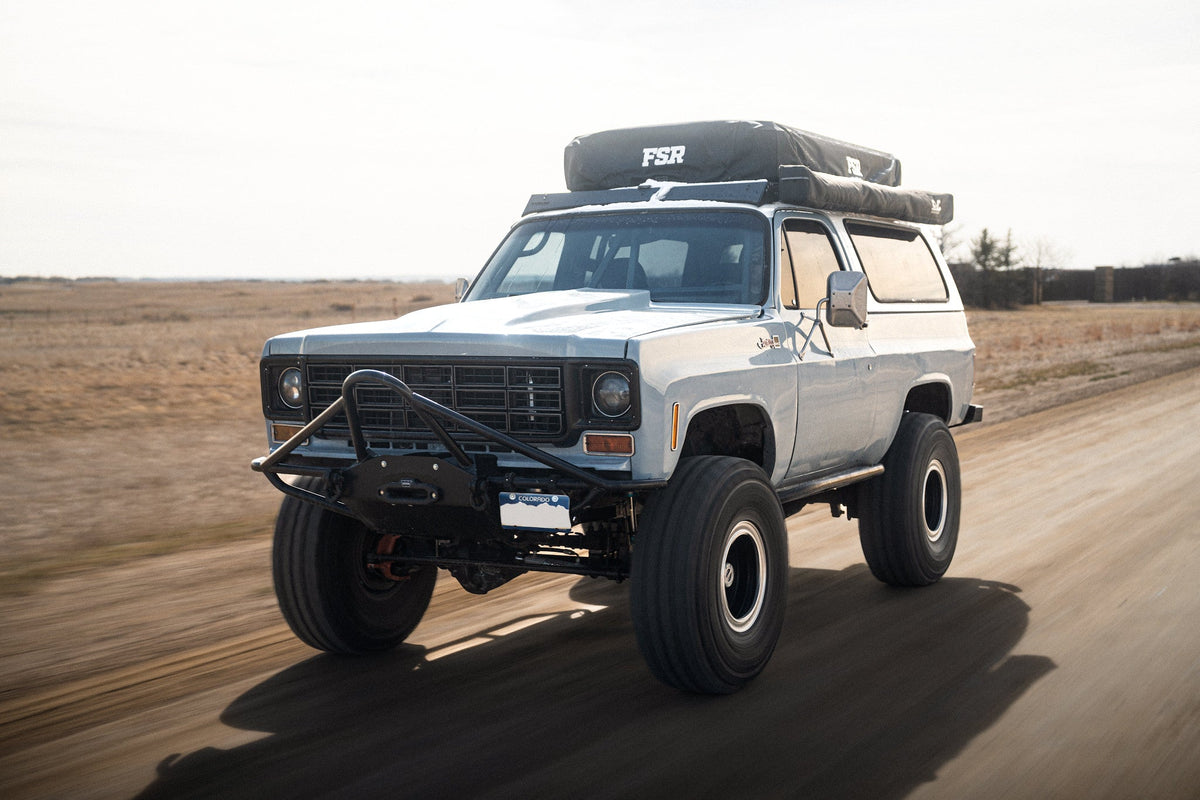
When you are side-hilling on an off-camber obstacle or hitting a deep rut like the Tacoma above, heavy weight on your roof acts like a pendulum. If you actually loaded 700 pounds of gear up top, the momentum would pull your rig straight onto its side.
We purposefully list our ratings lower because it is the safe, responsible limit for what your vehicle can handle without risking a rollover or crushing your factory roof channels.
Dynamic vs. Static
Incase you don't know the difference, here's a quick guide.
- Dynamic Load: The weight your rack can safely hold when your vehicle is moving.
- Static Load: The weight your rack can safely hold when parked.
We could inflate our numbers to match the competitors, but we refuse to use a marketing gimmick that puts your rig in danger. We engineer racks for the real world.

Leave a comment
This site is protected by hCaptcha and the hCaptcha Privacy Policy and Terms of Service apply.